
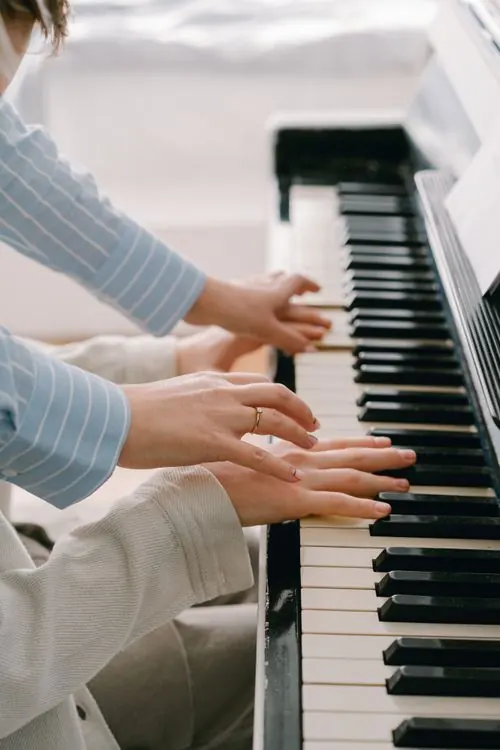
Start small and be consistent
Adults often start piano with a busy life, limited time and high hopes. The good news is that steady, short practice beats long, rare sessions. Thirty minutes a day, five days a week, is enough to see clear progress within a few months.
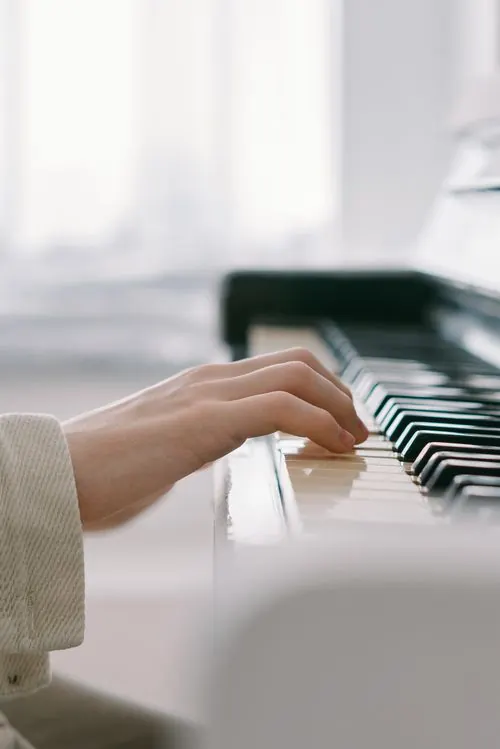
The 30 minute routine
Use this structure for each session:
- Warm-up (5 minutes). Play five-finger patterns slowly with each hand. Focus on an even tone and relaxed wrists.
- Scales and technique (5 minutes). Practise one scale or one exercise. Start hands separately, then together. Use a metronome at a slow speed.
- Piece work (15 minutes). Spend most of your time on the piece your teacher gave you. Break it into small sections of two or four bars. Repeat each section until it feels easy before you move on.
- Sight-reading or ear training (5 minutes). Read a short, easy piece you have not seen before. Do not stop when you make a mistake. Keep going at a steady pace.
Practise slowly and on purpose
Most adults want to play at full speed too soon. Slow practice is faster in the long run because it builds accurate movements. A good rule is to play at a speed where you make no mistakes. Increase the tempo by a small step only when the section is clean.
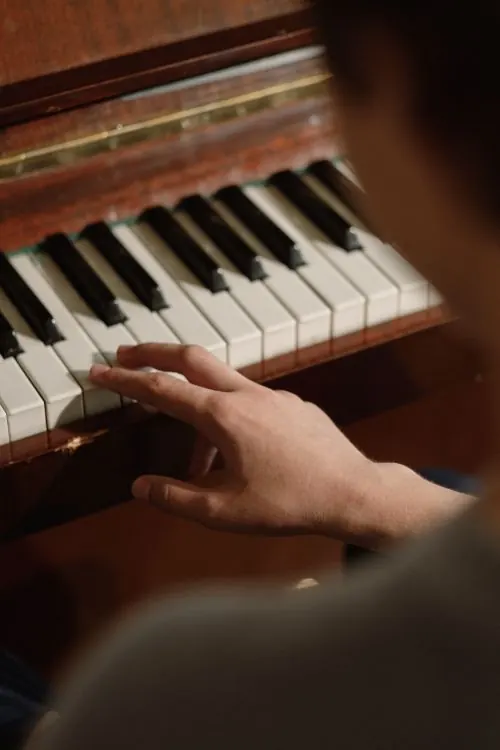
Keep a practice log
A simple notebook helps. Write down the date, the time you practised and one thing that went well. Add one thing to fix. Over a month, you will see patterns in your progress and your problem areas.
Common problems and fixes
- Tense hands or shoulders. Stop, shake out your hands, and check that your bench height lets your forearms sit level with the keys.
- Hands do not coordinate. Practise each hand alone until it is secure. Then join them slowly.
- Forgetting the piece. Learn the structure first: find the repeated sections, the key and the time signature.
- Feeling stuck. Change one thing for a week. Try a new piece, a different tempo or a new exercise.
Using an online lesson
A weekly one-to-one lesson gives you a second pair of ears. I can see your posture and hand position on camera, and I can hear what the practice log does not show. Bring one question to each lesson, and you will leave with one clear task for the week.
A sample week that makes the routine work
A routine is easier to keep when each day has a clear purpose. On Monday, learn the notes and fingering for a short section. On Tuesday, revisit that section slowly and listen for an even sound. On Wednesday, practise the join between it and the next phrase. On Thursday, play the whole piece once without stopping, then note the one passage that still needs attention. On Friday, revisit that passage and finish with a piece you enjoy. This is a flexible example, not a rule: busy weeks may call for three focused sessions rather than five rushed ones.
Make the instrument and practice space work for you
Sit far enough from the keyboard that your elbows can bend comfortably. Keep the music at a readable height and put a phone or timer out of reach so notifications do not break concentration. If you use a digital keyboard, check that the stand is stable and the volume lets you hear a soft touch as well as a loud one. A metronome is useful only when it helps you notice pulse; it should not force you to play faster than you can control.
How to tell whether practice is working
Progress is not only a faster piece. Notice whether you can begin at a marked place, recover after a small slip, keep a steady pulse, and explain what you are practising. Record a short clip every few weeks using the same passage and tempo. Compare the sound and ease of playing, not just the number of notes. If discomfort persists, stop and ask a qualified teacher to check your position rather than practising through pain.
Next steps
- Book a free demo to discuss your goals and current level.
- Read about plans and fees for weekly or monthly lessons.
- Learn theory alongside your piano practice to speed up reading.