
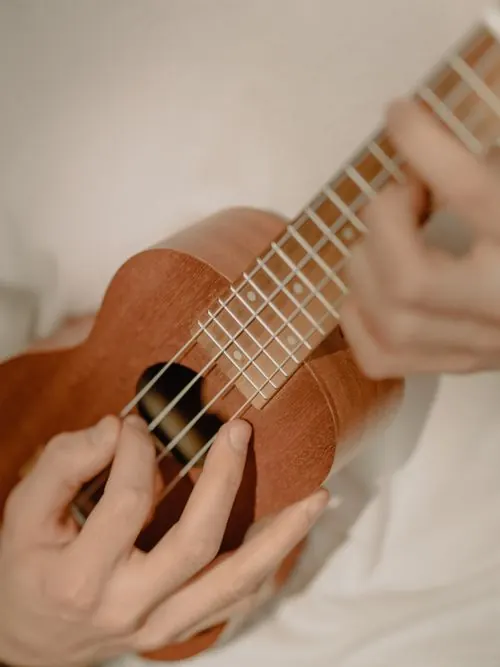
The short answer
Choose the ukulele if your child wants to play songs quickly and enjoy a small, portable instrument. Choose the keyboard if your child wants a stronger foundation in reading music, both hands and theory, and can practise on a regular basis. Both are good starting points.
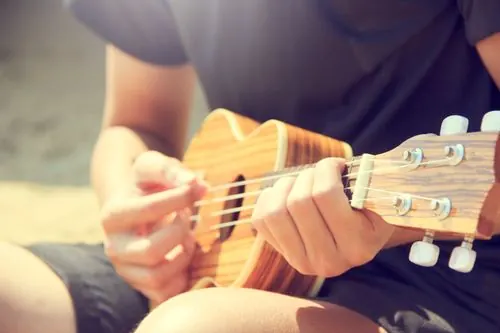
Ukulele: quick songs and a small size
Strengths
- Four strings and a small body, so it is easy for a child to hold.
- Simple chords mean your child can play a recognisable song within weeks.
- It is usually a lower-cost instrument to buy.
- It is easy to carry, so practice can happen anywhere in the house.
Things to consider
- Fingertips can feel sore at first. Short, frequent sessions help.
- Ukulele does not give the same reading foundation as keyboard, unless you add theory lessons.
- Some children tire of chords and want more variety. A teacher can add melody, rhythm and reading.
Keyboard: both hands and a theory foundation
Strengths
- Both hands play separate parts, which builds coordination.
- The layout of the keys makes note names and patterns easy to see.
- Keyboard is a strong base for later piano study and for theory exams.
- A keyboard can play many styles of music, from classical to pop.
Things to consider
- Choose a keyboard with touch-sensitive keys if you can. Simple keys can make expression harder to learn.
- It takes up more space than a ukulele.
- Children need a regular, quiet time to practise.

Questions to ask yourself
- What does my child enjoy? A child who loves songs may do better on ukulele. A child who loves structure may enjoy keyboard.
- How much space do we have? A ukulele fits in a corner. A keyboard needs a stand and a clear spot.
- What is the long-term plan? If your child may take piano exams later, keyboard gives an easy route. If your child wants to play with friends, ukulele can be a quick start.
- How much time can we give? Short, regular sessions work for both.
- What is our budget? Compare the cost of the instrument, lessons, music books and any accessories.
Tips for online lessons with children
- Set up a quiet, well-lit space with the camera at the child’s hands.
- Keep sessions short. For young children, 20 to 30 minutes is often enough.
- Build in breaks. Movement helps focus.
- Praise effort. Name one thing your child did well in each session.
- Practise little and often. Five minutes a day is better than one long session each week.
Our approach to teaching children
We teach ukulele and piano and keyboard one-to-one and online. Lessons are paced to the child, with clear goals each week. Because lessons are live, I can see how the child is holding the instrument and correct any problems early.
Before you book, tell us your child’s age and attention span, and we will suggest the instrument and lesson length that suit them best.
Match the choice to the child, not an age rule
There is no universal age at which every child is ready for an instrument. Consider whether they can sit or stand comfortably, follow a short instruction, and show interest in making sounds. Hand size, coordination, attention and previous musical play all matter, but they vary from child to child. A short introductory session can help a family see whether the instrument feels inviting before buying a more expensive setup.
What to check when buying
For a ukulele, look for a size the child can hold without straining and strings that are not excessively high above the fretboard. For a keyboard, prioritise stable support, a comfortable playing height and keys that respond consistently; touch sensitivity is useful for learning dynamics. A full-size weighted piano is not essential for every beginner, but a very small toy keyboard may limit technique. Ask the teacher what minimum setup suits the planned lessons, then compare a few instruments in person if possible.
Build a child-friendly practice habit
Agree on a predictable time and a small task rather than demanding a long session. A parent can help set up the device, check the weekly practice note and celebrate effort without correcting every sound. Keep the instrument accessible and make practice easy to begin. If attention fades, finish with a successful short exercise or favourite tune. For online classes, place the camera so the teacher can see the child’s hands and instrument, and have a parent nearby to support younger learners and communication.
Next steps
- Book a free demo with your child, so we can see what they enjoy.
- Read about starting guitar in 90 days if your child is also interested in strings.
- See fees and plans.